
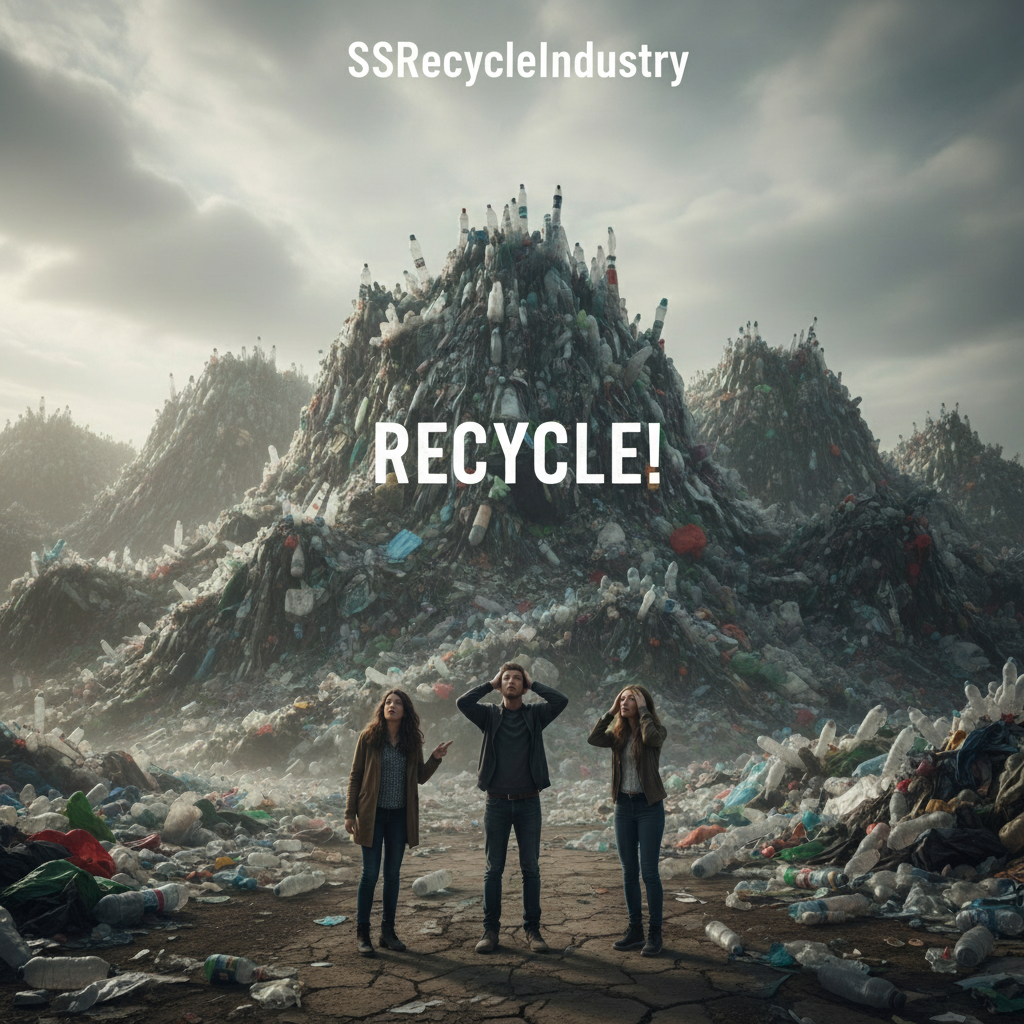
For decades, the world has heard the same message:
“Recycle more. Try harder. It’s your responsibility.” But here’s the uncomfortable truth almost no one talks about . We can’t recycle our way out of plastic pollution because consumers were never the real cause. The system was never designed to succeed.
The companies creating the plastic were never required to take accountability for it.
And the burden quietly shifted onto you. Yet now, for the first time in history, a policy is forcing the real polluters to pay.
It’s called EPR — Extended Producer Responsibility. And it’s not just another environmental idea . It’s a complete rewiring of how plastic waste works at a national and global scale. This might be the most important environmental shift of our lifetime.
CORE PROMISE
By the end of this blog, you’ll understand:
Who is truly responsible for plastic waste
- Why recycling systems fail
- How EPR forces companies to change
- What this means for governments, brands, and consumers
- The economic incentives that will finally reduce plastic
- The hidden dynamics no one in the plastics industry wants you to know
This article will save you years of confusion and reveal the real levers behind environmental change.
THE PROBLEM: RECYCLING WAS NEVER BUILT TO HANDLE THIS MUCH PLASTIC
Recycling was invented for metals and glass , materials that can be melted and reused indefinitely. Plastic is different:
- It degrades each cycle
- It mixes with additives
- It can’t be sorted perfectly
- It’s cheaper to produce new plastic than reuse old
Result?
Only 9% of global plastic is recycled.
Everything else is burned, buried, or dumped—often in countries with weak waste regulations. And yet consumers get told , “Recycle better.” As if the system fails because people didn’t rinse a bottle perfectly. Here’s the truth:
Recycling didn’t fail. It was set up to look like it was working.
FOLLOW THE MONEY: WHY PRODUCERS ESCAPE ACCOUNTABILITY
For decades, plastic producers have had zero financial responsibility for what happens after a product is sold. If a product is:
- Impossible to recycle
- Made of mixed plastics
- Or unlabelled for sorting
It simply becomes someone else’s problem.
Producers make profit. Governments pay for cleanup. Consumers get blamed. This imbalance exists because recycling was funded by municipalities not the companies producing the material. EPR rewrites this story.
WHAT IS EPR? THE SIMPLE DEFINITION NO ONE GIVES YOU
Extended Producer Responsibility (EPR) means:
If you manufacture or sell packaging, you must pay for the cost of collecting, sorting, recycling, and disposing of it. In other words:
Polluters pay. Not consumers. Not governments.
This shifts:
- Power
- Pressure
- And cost
Onto the companies that create waste in the first place. EPR essentially turns waste management into a bill companies can’t avoid.
HOW EPR TRANSFORMS THE ENTIRE SYSTEM
Here’s what EPR changes behind the scenes:
A) Producers now fund recycling programs
Not taxpayers.
This creates real budgets for real recycling—not the illusion of it.
B) Companies pay more for non-recyclable packaging
If a brand uses plastic no facility can handle, they get charged more.
Suddenly, bad design becomes expensive.
C) Packaging redesign accelerates
Because EPR makes sustainability a financial advantage, not a marketing slogan.
D) Governments get consistent, reliable funding
Waste systems stop relying on fluctuating budgets.
E) Circular systems become economically viable
EPR creates demand for recycled material — making the entire loop actually functional.
THE SECRET INCENTIVE: WHY EPR FINALLY WORKS
The genius of EPR isn’t environmental. It’s economic.
Once a company has to pay for waste, two things happen fast:
- They reduce packaging
- They switch to recyclable alternatives
Not because they “care” , but because it saves them money. The environment wins because waste becomes expensive.
NO ONE TALKS ABOUT THIS BUT…
The plastics industry spent decades funding campaigns to convince the public that:
- plastic is recyclable
- the problem is “consumer responsibility”
- waste is a behavior issue, not a design issue
Why?
Because blaming consumers keeps profit models safe. Once EPR spreads globally, these companies will face the one thing they’ve avoided: Financial accountability. Expect heavy lobbying, misleading ads, and PR campaigns trying to weaken EPR laws. This fight is only beginning.
THE EPR EVOLUTION MODEL
A simple 4-stage model showing how EPR transforms plastic systems:
Stage 1 — Awareness
Governments identify that recycling rates are collapsing.
Stage 2 — Accountability
Producers are required to pay for the waste they create.
Stage 3 — Redesign
Companies rapidly shift toward:
- mono-material packaging
- recyclable plastics
- refill systems
- compostable alternatives
- reduced packaging volume
Stage 4 — Circularity
Recycling becomes profitable →
Recycled material becomes cheaper →
Loop becomes self-sustaining.
This is how nations like Germany achieve 50%+ recycling rates while others stay below 10%.
CLOSING
We’ve blamed consumers for decades.
But the truth is simple: Plastic waste isn’t a behavior problem , it’s a system design problem. And for the first time ever, that system is being rewritten. The future is circular.
The pressure is shifting. And accountability is finally catching up.
#PlasticCrisis#PlasticPollution#WasteWarriors#RecyclingReality#PlanetOverPlastic#BreakThePlasticWave#EcoAwakening#SustainabilityNow#EarthEmergency#ZeroWasteMovement
✍️ Written by Sachin Shinge, Founder & CEO of S S Recycle Industry & SR Elite Exporters — building India’s green trade future.